Look at the colours on your clothes rail after a week of getting dressed. The top you put on twice and the one you took off before leaving home give you something to investigate. A wardrobe colour quiz works best when you test those decisions in daylight and look at what the garments actually do near your face. By the end you should be able to name a few shades you can wear together and explain why they earn their place.
Audit your most-worn outfits
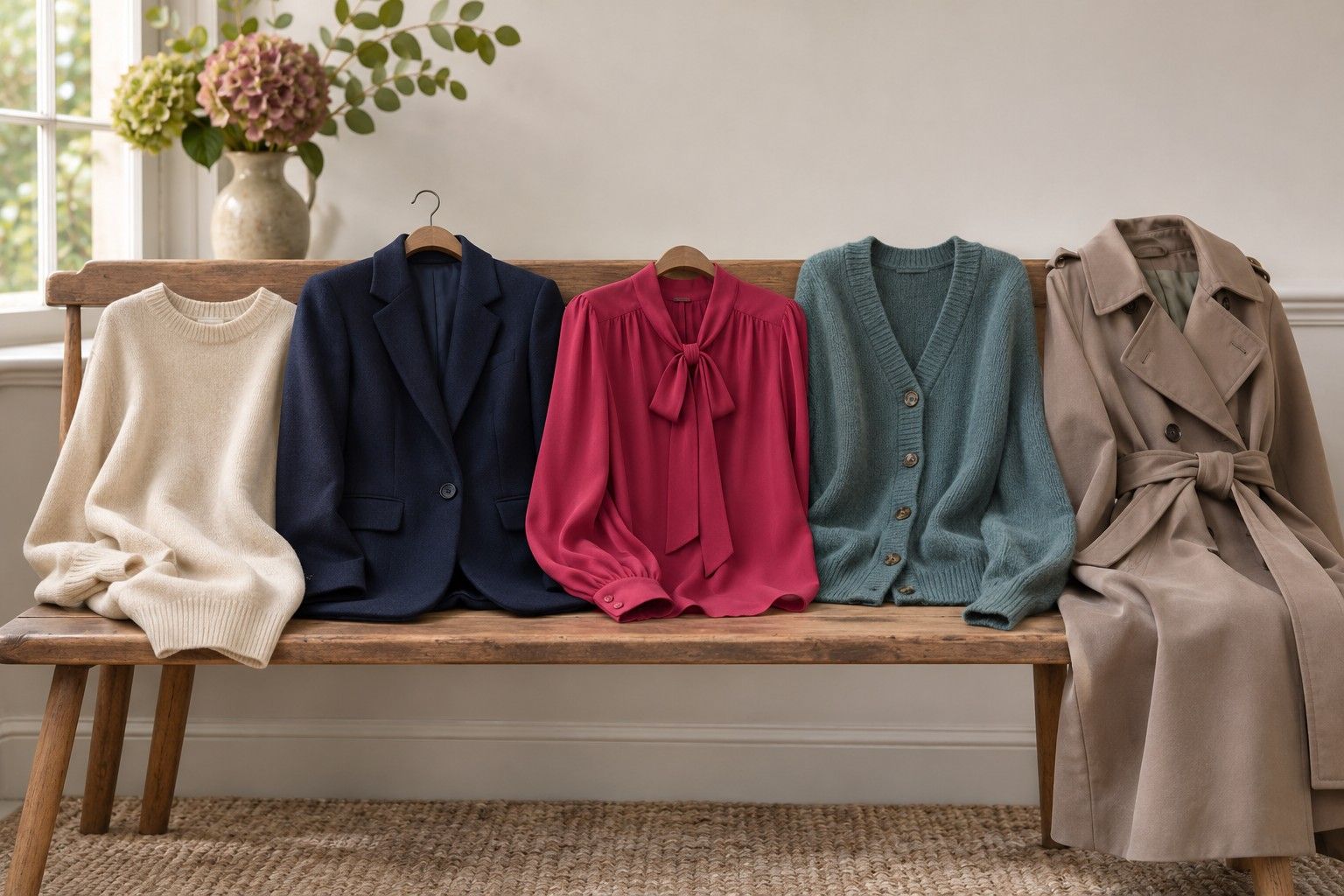
Pull out three tops you wore in the past fortnight. Add two that stay on their hangers even when the occasion suits them. Put aside anything with a practical problem you can name immediately. If you avoid a pale blouse because it needs ironing or a blue shirt because it pulls at the shoulders, the absence of wear tells you very little about colour. Look for garments you can compare because they have roughly the same neckline and weight. A fine-knit crew neck and another fine-knit crew neck offer a fairer comparison than a linen jacket and a satin slip dress.
Ask what you change when you reach for each top. Do you always add a scarf to the black jumper? Do you unbutton the rust cardigan until the light T-shirt underneath shows at your neck? A garment can work because the visible colour beside your face has changed. Take a quick note about those combinations. Record the simplest version of one outfit you already like, including the distance between the neckline and your face, and how much of the accent colour shows.
Give each garment two descriptions. One should name what you see, such as smoky blue, pale khaki or clear berry. The other should describe its job, such as everyday base, softening layer or a bright accent. A navy cardigan earns its place in a different way from an electric blue shirt. Knowing which job a colour does helps when you have plenty of attractive pieces and still struggle to get dressed. Two good accent tops cannot replace a neutral layer that works over both.
Compare necklines in daylight
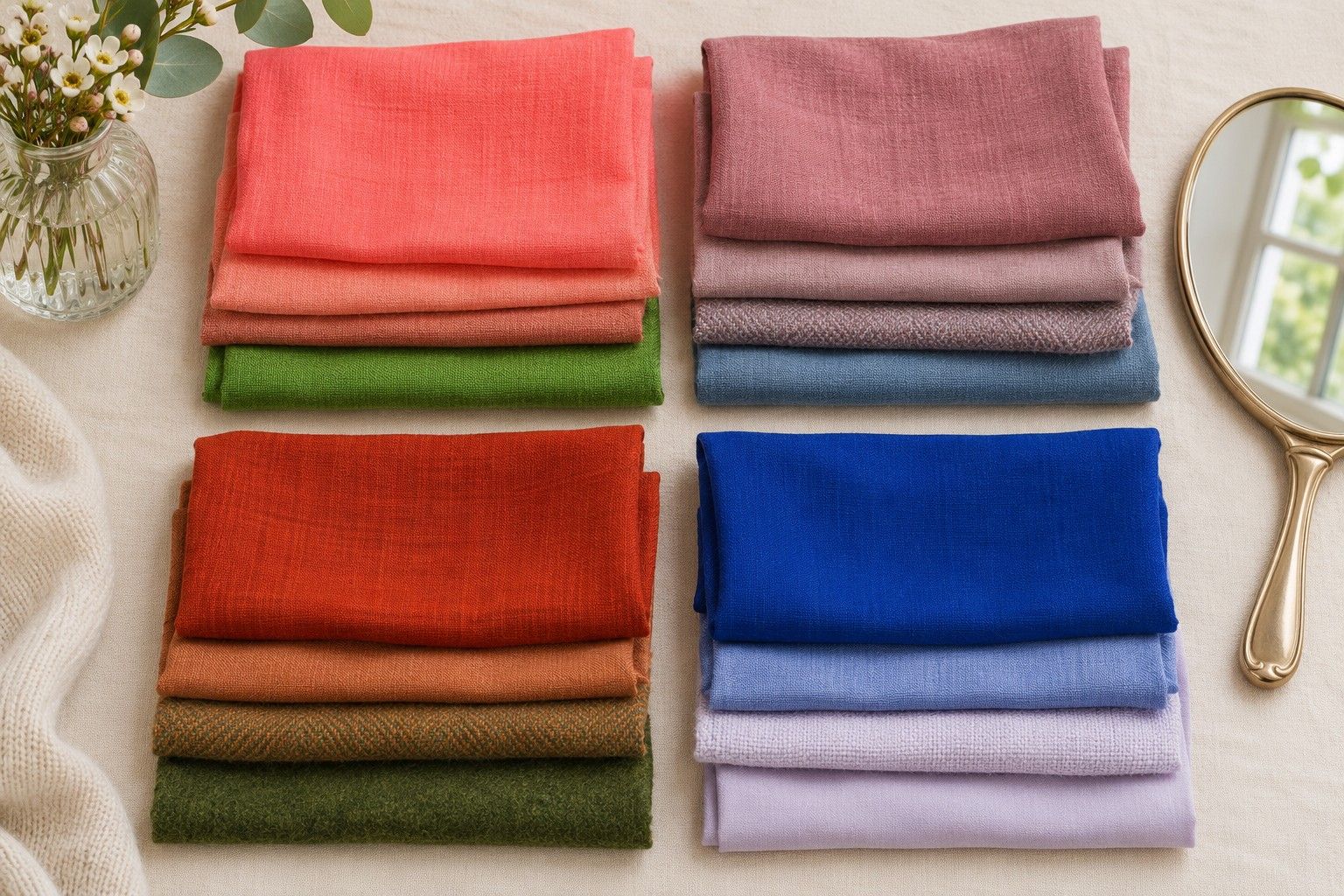
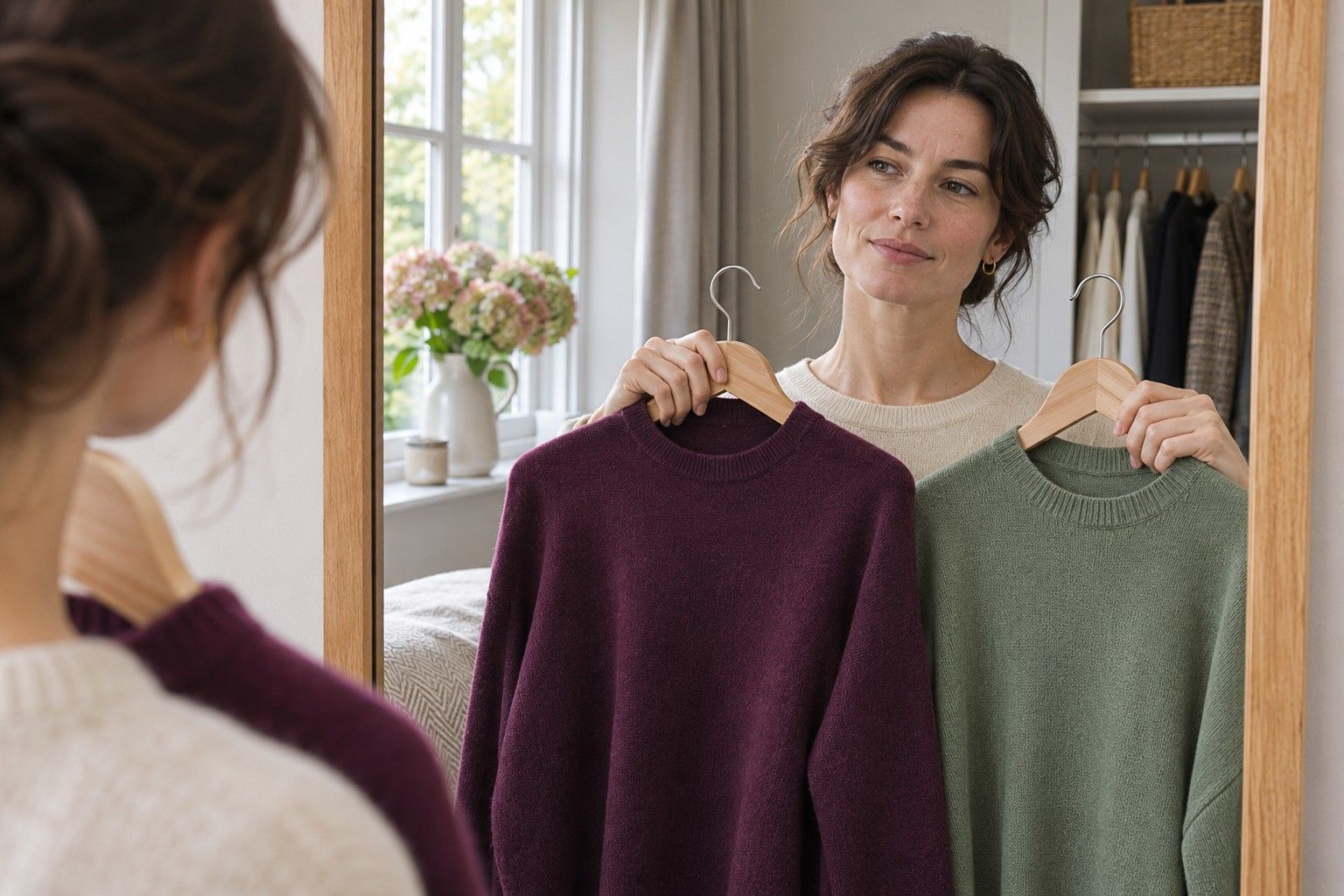
Stand facing a window with indirect daylight and turn off the nearby lamps. Hold the first fabric at the collarbone, then replace it with the second at the same height. If you can see a strip of the shirt you are wearing, cover it for both comparisons. Keep the mirror and your position fixed. A bright wall or coloured curtain can reflect light onto your face, so move to a plainer spot if the entire reflection takes on a tint. Drop both fabrics for a moment between rounds and look at your face with a plain towel or a neutral top under your chin.
Begin with a pair that differs in one way you can describe. Try two mid-depth pinks, with one tending towards peach and one towards rose, to compare warmth. The pair is much less informative if the peach is a pale cotton and the rose is deep satin. Compare a dusty blue with a clearer blue of similar depth to test whether softer colours are easier to wear. To check depth, take two cool greys or two warm browns and compare a lighter one with a deeper one. If all the warm items are dark and all the cool ones are pale, record the depth comparison first and borrow a better pair for the temperature question.
Watch the same places on each round. It helps to follow the edge of the lower lip, the shadow just under the chin and the difference between cheek and jaw. Which fabric gives you an even impression when you look at your whole face again? If a colour makes the fabric the first thing you see, decide whether that is the effect you want for that outfit. Reverse the order and repeat. A clear preference that survives the second round is worth writing down. When the result flips, leave it open and try different fabrics in the same part of the palette.
Balance your palette with personal taste
Now ask which of your winning shades you would happily wear three days a week. Circle two colours that make a reliable base and one that feels like you. The base colours might be cocoa and warm ivory, while an olive or a persimmon accents one outfit at a time. You can also build around ink and soft white with a dusty berry accent. Start from the actual garments on the rail. Colour names are loose categories and two shops can use the same name for fabrics that look very different by a window.
Keep colours you enjoy and test how much space they need in the outfit. A favourite yellow you found overpowering as a high-neck jumper may be exactly right in a small pattern or a skirt. A black blazer may feel severe over a deep top and balanced over a pale open collar. A large earring can make a contrasting colour more visible than you expected, so try it while you are wearing the top you plan to pair it with. Where a colour sits matters as much to the outfit as its name or season.
Notice which settings matter to you. For a meeting under overhead lighting you might prefer a softer jacket with an open collar because a high, very dark neckline makes the chin shadow more apparent. For an evening out, the same dark neckline might give you the look you want. Give yourself a choice for each situation. One palette can include a quieter everyday outfit and a sharper one for when you want the clothes to have more presence.
Repeat the best outfit formulas
Build two outfits from your notes. For the first, choose a familiar base and swap one thing near the face, such as a shirt, scarf or cardigan. If you wear grey trousers and a navy jacket on repeat, try a muted plum top one day and a brighter purple top of similar depth another day. Keep the shoes and jewellery the same. You are testing which top fits the wardrobe and how it feels to wear, so check it in your usual indoor light as well as by the window. Note whether the colour still works once the jacket comes off.
For the second outfit, pick a colour you want to wear more often and use it twice in different amounts. A rich teal might first appear as a top with plain trousers. On another day, try it as a small stripe above a deep grey layer. If the teal top works by itself yet fights your patterned coat, you have found an outfit problem with a specific cause. Match it to a quieter coat or put the teal on a smaller item you can remove indoors. Pay attention to how easily each version comes together in the morning. A repeatable combination is more useful than a beautiful one you have to remake from scratch every time.
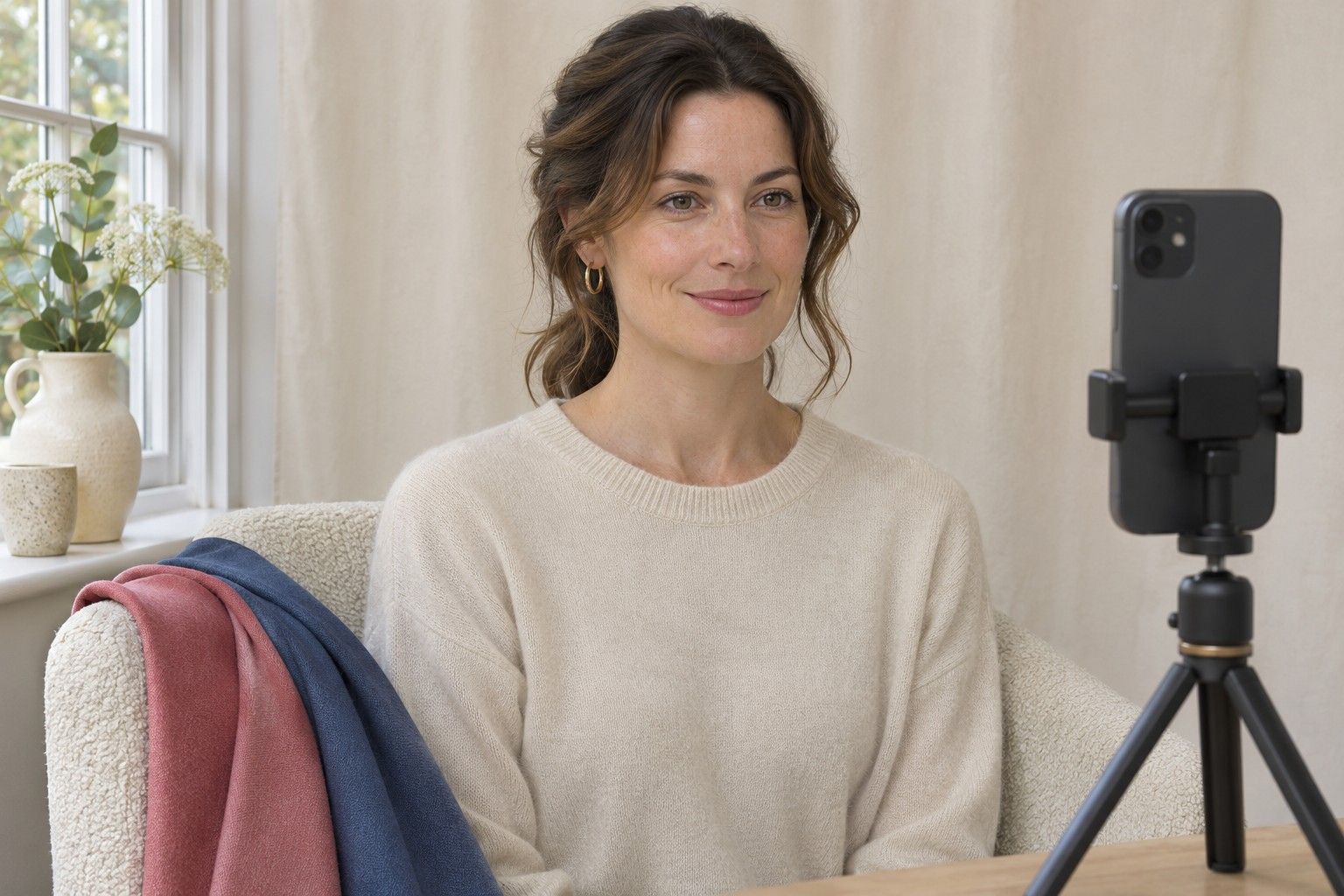
When you shop, photograph the garments that already work together or bring a small fabric reference with you. Your phone photo can remind you of the relationships between colours, and a piece of real fabric gives you a better basis for comparing shades under the same light. Ask which outfit the new item completes and whether you would wear it near your face or farther down. If the answer is a real combination you can assemble today, you have a concrete result from your wardrobe quiz. Save a seasonal label if it helps you find ideas, and keep the outfit you tested as your reference.