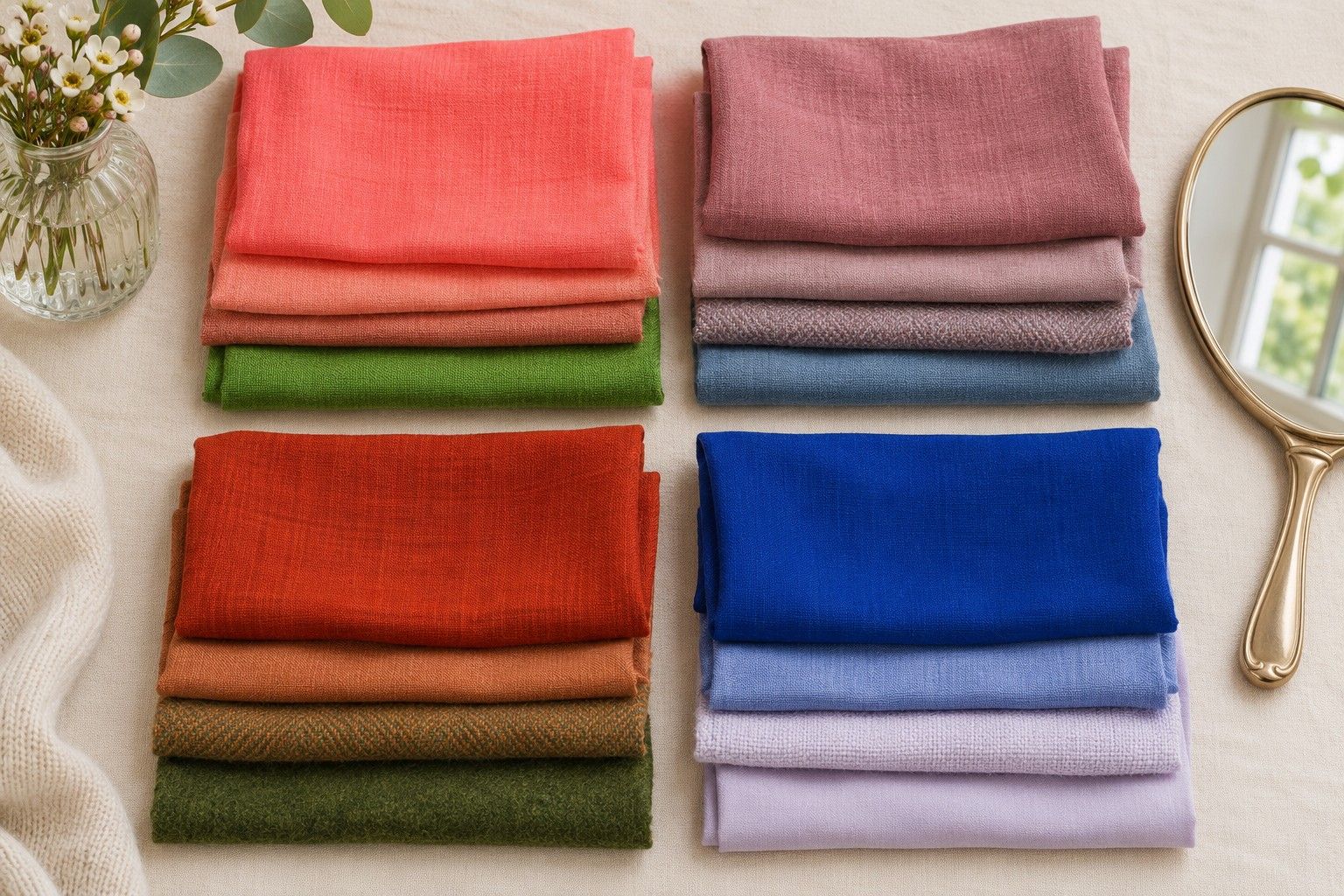
A colour palette quiz can leave you staring at a chart of thirty shades and wondering which jumper to buy. Start with five shades you can try with the clothes already in your wardrobe. A light neutral, a dark neutral, two accents and a bridge colour give you enough to build a few outfits and see which parts of the quiz result earn their keep.
Pick a light and dark neutral
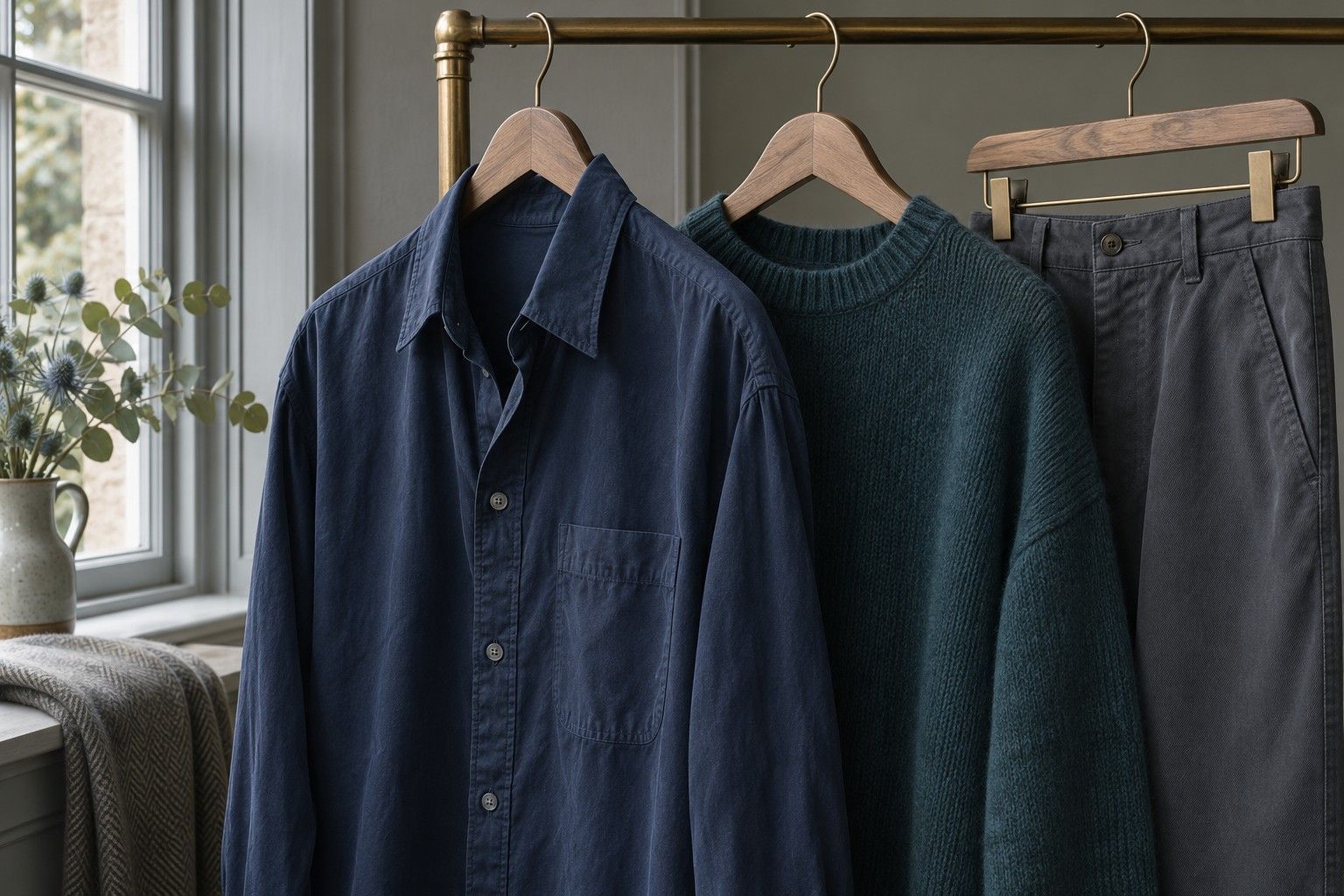
Begin with one light colour that could do the work of a T-shirt or shirt and one dark colour you would wear in trousers, knitwear or a jacket. Check the light one against white paper so you can see whether the cloth is creamy, pinkish, blue-white or grey. Then hold it just under your chin in daylight, first on its own and again against a jacket you wear most weeks. If the jacket is navy, test your white and cream options with both your face and the navy in view. The collar and jacket will share the same small space in a real outfit.
For the dark neutral, pull out your most-worn coat or pair of dark trousers before browsing a swatch chart. Espresso, charcoal, ink and black all work as dark anchors, but they can make a light companion look warmer, cooler or more stark. If your quiz result points towards chocolate and you wear a charcoal coat, see how much of the charcoal sits near your face once you have put a scarf on. It may be a well-used dark neutral with a different role. Run the same check with shoes and a bag if you wear little colour above the waist.
See how much distance you want between the light and dark shades. White with black makes a strong break, oatmeal with olive can be gentler, and grey with washed navy offers a middle ground. You might like a strong contrast around a jacket opening but a quieter one across a whole outfit. Test where the colours meet, such as an open shirt on a tee or a short-sleeved knit against high-waisted trousers, before deciding which pair you will wear together.
Choose two repeatable accents
Look for a colour you would happily wear more than once this week. Try it with your chosen light neutral and then with the dark one. A light coral scarf might work with cream and brown, for example, but look much brighter than expected against a nearly black coat. If you still enjoy that contrast, it can be your first accent. If it distracts you every time you catch the combination in the mirror, try a softer or deeper version of coral and compare again.
The second accent should give you a different option when you get dressed. If your first is a pink or red, a blue or green may take you in a different direction. Two colours within the same family can work too if they play distinct roles. You might use soft rose as a top and a deeper red as a bag. Test each without the other present. There is no need to wear all five colours in one outfit, and a versatile accent should have at least one good partner among the neutrals.
Swatches also look different at full scale. Hold a folded jumper under your face before deciding from a small online square. Large areas of colour tend to make brightness or depth more obvious. A strong yellow that you love in a tiny print might feel loud on a coat, and a deep berry that looks plain in a thumbnail may be exactly right in a soft knit. If you like the colour at one scale only, write down the garment or accessory you would use it for.
Find a flexible bridge colour
The bridge has a specific job. It joins a colour from your quiz to a piece that is already in heavy rotation. If your old staples are in cool denim and your new accents are warm, a softly coloured ecru, a worn brown belt or even a striped cotton shirt might carry a little of both parts of the outfit. You can choose a single colour or pick out a predominant colour from a small pattern. Look at the pattern from several steps away to see what registers first.
| What you wear often | Suggested accent | Bridge to try |
|---|---|---|
| Indigo jeans | Soft peach | Ecru cotton that softens the jump from dark indigo to peach |
| Charcoal coat | Dusty rose | A grey scarf with a slight rose cast |
| Olive trousers | Rust | A muted tobacco brown in a belt or jumper |
| Black skirt | Clear blue | Blue-grey denim or a fine blue and charcoal check |
Try the bridge where the combination felt abrupt. A scarf between a dark coat and a light top changes the contact point by your face. A textured bag held off to one side does less to settle a sharp break at the neckline, but may help tie together the shoes and outerwear. Move the shade around using a small length of fabric or a familiar accessory. Seeing where it makes a difference helps you decide what item, if any, fills that gap.
If the same bridge only works with one outfit, that is still a combination you can keep. To make your five-colour set more versatile, see whether a shade with a softer edge can cover two roles. A smoky teal can connect navy and green, and a greyed plum might sit happily by charcoal and dusty rose. Accept the better colour in a real piece even if its label differs from the chart. Shops use names such as stone and mist for a wide variety of shades.
Test outfits with your shortlist
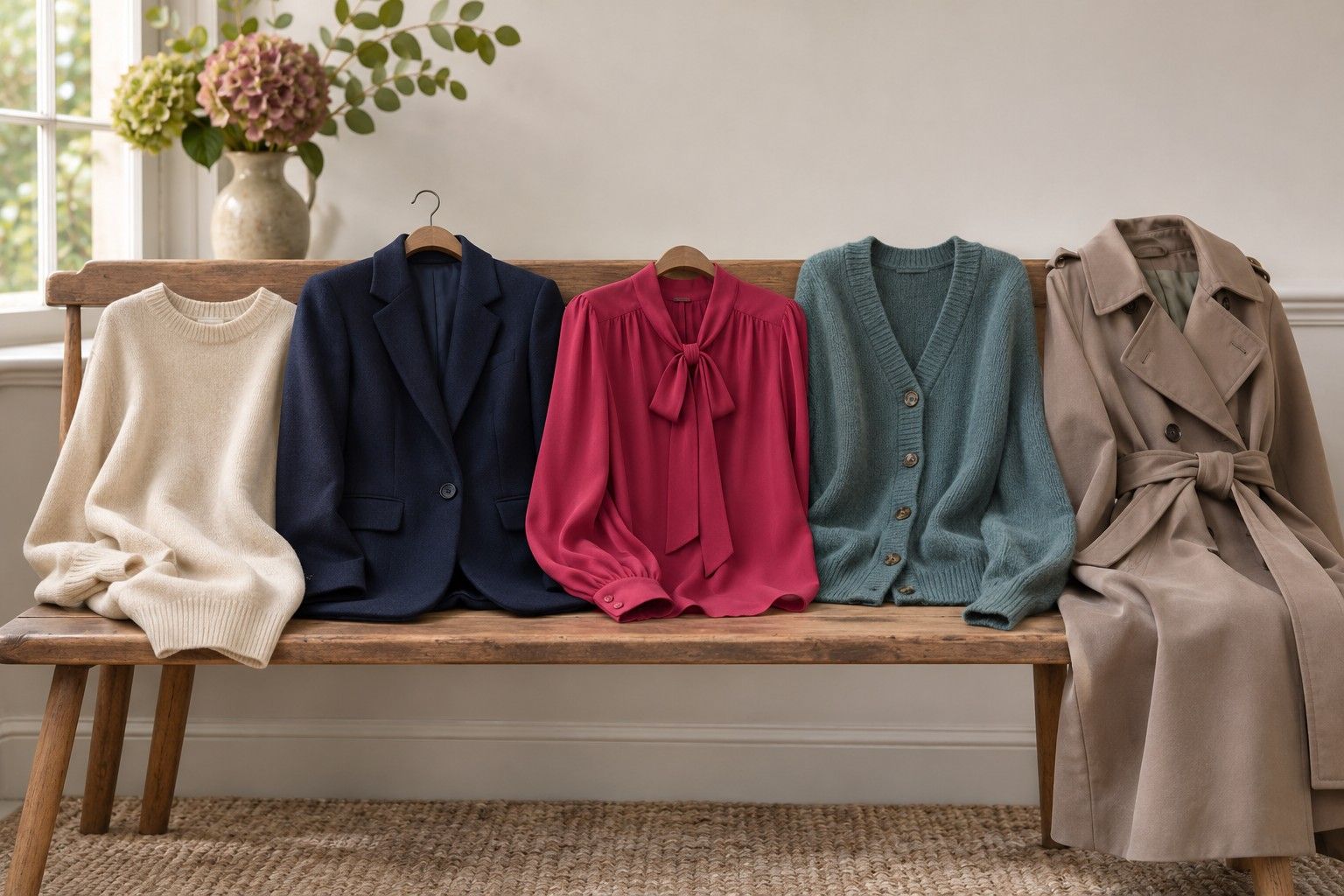
Set out three complete outfits on a bed or rail. Make one with both neutrals and one accent. Put the second accent against the neutral it works with best. Use the bridge in a third outfit that keeps an older favourite in play. Try them on with your normal shoes and accessories. If an outfit only works when you take the jacket off, look at the balance under both conditions before buying a new top to match a coat you wear outdoors for ten minutes.
Stand at the window to compare the colours first, then look at the same combination in the kind of light where you will wear it. Restaurant lamps, classroom fluorescents and a shaded commute can make the same blue look quite different. If the colour changes but the outfit still appeals to you, keep it in the rotation. If it only works by that one window, compare a second shade under both conditions. Screenshots are handy for remembering the shape of the outfit. A scrap of cloth or a small garment gives you a better reference for the colour in a shop.
Give each outfit a proper outing and notice where you hesitate. If the best-looking one is uncomfortable at the neck, an identical colour in a different cut may solve the actual problem. If the second accent stays in the drawer because it requires different shoes every time, check whether a similar shade can work with the pairs you own. In the meantime, keep your remaining four colours together. Every time you wear two or three of them successfully, you learn a little more than another set of quiz swatches can tell you.
Save a short note for each shade with the item you tested. A note such as “light neutral: cotton ecru shirt, worked with dark denim and peach scarf” gives you something concrete to match. If a suggested colour keeps failing despite several combinations, substitute a shade that does the same job. The shortlist stays useful when every colour has somewhere to go.